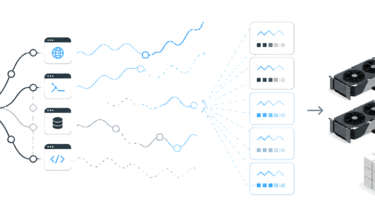
GigaTIME: Scaling tumor microenvironment modeling using virtual population generated by multimodal AI

The convergence of digital transformation and the GenAI revolution creates an unprecedented opportunity for accelerating progress in precision health. Precision immunotherapy is a poster child for this transformation. Emerging technologies such as multiplex immunofluorescence (mIF) can assess internal states of individual cells along with their spatial locations, which is critical for deciphering how tumors interact  

Read more

Lazy Imports Land in Python and Other Python News for December 2025

A lot happened last month in the world of Python! The core developers pushed ahead on Python 3.15, accepting PEP 810 to bring explicit lazy imports to the language. PyPI tightened account security, Django 6.0 landed with a slew of new features while celebrating twenty years of releases, and the Python Software Foundation (PSF) laid out its financial outlook and kicked off a year-end fundraiser. Let’s dive into the biggest Python news from the past month! Python Releases and PEP […]

Read more

Quiz: How to Use Google’s Gemini CLI for AI Code Assistance

Interactive Quiz ⋅ 7 QuestionsBy Bartosz Zaczyński Share In this quiz, you’ll test your understanding of the How to Use Google’s Gemini CLI for AI Code Assistance tutorial. By working through these questions, you’ll revisit how to install and verify prerequisites like Node.js, explore authentication options, and understand the CLI’s permission and safety model. You’ll also practice managing interactive sessions, enforcing stronger models, and approving or editing shell commands securely. To deepen your understanding, review the sections on verifying your […]

Read more

How to Use Google’s Gemini CLI for AI Code Assistance

This tutorial will teach you how to use Gemini CLI to bring Google’s AI-powered coding assistance directly into your terminal. After you authenticate with your Google account, this tool will be ready to help you analyze code, identify bugs, and suggest fixes—all without leaving your familiar development environment: Gemini CLI Imagine debugging code without switching between your console and browser, or picture getting instant explanations for unfamiliar projects. Like other command-line AI assistants, Google’s Gemini CLI brings AI-powered coding assistance […]

Read more

Introduction to pandas

The pandas DataFrame is a structure that contains two-dimensional data and its corresponding labels. DataFrames are widely used in data science, machine learning, scientific computing, and many other data-intensive fields. DataFrames are similar to SQL tables or the spreadsheets that you work with in Excel or Calc. In many cases, DataFrames are faster, easier to use, and more powerful than tables or spreadsheets because they’re an integral part of the Python and NumPy ecosystems. In this video course, you’ll learn: […]

Read more

Ideas: Community building, machine learning, and the future of AI

HANNA WALLACH: Yeah, so I was a PhD student at the University of Cambridge, and I was working with the late David MacKay. I was focusing on machine learning for analyzing text, and at that point in time, I’d actually just begun working on Bayesian latent variable models for text analysis, and my research was really focusing on trying to combine ideas from n-gram language modeling with statistical topic modeling in order to come up with models that just did […]

Read more

Quiz: Quantum Computing Basics With Qiskit

Interactive Quiz ⋅ 7 QuestionsBy Martin Breuss Share Dive into quantum computing fundamentals with this quiz. You’ll practice key ideas like superposition, measurement, entanglement, and how quantum and classical systems work together. You’ll also revisit essential Qiskit commands and understand what limits today’s quantum computers. Need a refresher? Check out Quantum Computing Basics With Qiskit for clear explanations and hands-on examples. The quiz contains 7 questions and there is no time limit. You’ll get 1 point for each correct answer. […]

Read more

Quantum Computing Basics With Qiskit

Every classical computer reduces the world to 0s and 1s. That binary framework has carried us from calculators to supercomputers, but some problems demand checking through 2n possibilities, a task that outpaces even the best machines. Now, what if information could exist in many states at once? That what if turned into a new model called quantum computation. Keep reading to break with binaries and get an overview of quantum computing basics. By the end of this tutorial, you’ll understand […]

Read more

How to Convert Bytes to Strings in Python

Converting bytes into readable strings in Python is an effective way to work with raw bytes fetched from files, databases, or APIs. You can do this in just three steps using the bytes.decode() method. This guide lets you convert byte data into clean text, giving you a result similar to what’s shown in the following example: >>> binary_data = bytes([100, 195, 169, 106, 195, 160, 32, 118, 117]) >>> binary_data.decode(encoding=”utf-8″) ‘déjà vu’

Read more
1 2 3 4 5 944