Building a Healthcare Robot from Simulation to Deployment with NVIDIA Isaac
A hands-on guide to collecting data, training policies, and deploying autonomous medical robotics workflows on real hardware Table-of-Contents
Read moreDeep Learning, NLP, NMT, AI, ML
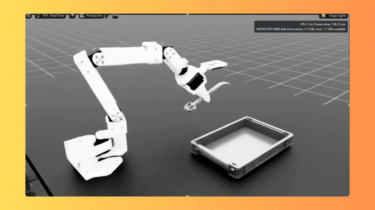
A hands-on guide to collecting data, training policies, and deploying autonomous medical robotics workflows on real hardware Table-of-Contents
Read more
The status quo of AI chip usage, that was once almost entirely U.S.-based, is changing. China’s immense progress in open-weight AI development is now being met with rapid domestic AI chip development. In the past few months,
Read more
It’s been fantastic to see the community dive into our new MiniMax M2, with many highlighting its impressive skills in complex agentic tasks. This is particularly exciting for me, as my work was centered on the agent alignment part of its post-training. In this post, I’d like to share some of the key insights and lessons we learned during that process.
Read more
Today, we are happy to announce a new and deeper partnership with Google Cloud, to enable companies to build their own AI with open models. “Google has made some of the most impactful contributions to open AI, from
Read more
Looking to show off your robotics aptitude? The AMD Open Robotics Hackathon hosted by AMD, Hugging Face, and Data Monsters is the place to do it. Whether you’re a student, hobbyist, startup
Read more
We converted our 15B reasoning model to a Mamba hybrid achieving 2.1x throughput with minimal quality loss. The key? A non-obvious insight about what data to distill on, and why intuition fails here. When MiniMax published their M2 post-mortem in October explaining why they abandoned efficient attention at 230B scale, the narrative briefly became “efficient attention is dead.” Within days, Kimi Linear proved otherwise. The real lesson: it depends on your constraints. Our constraint was simple: we had a strong […]
Read more
While everyone (and their grandma 👵) is spinning up new ASR models, picking the right one for your use case can feel more overwhelming than choosing your next Netflix show. As of 21 Nov 2025, there are 150 Audio-Text-to-Text and 27K ASR models on the Hub 🤯 Most benchmarks focus on short-form English transcription (<30s), and overlook other important tasks, such as (1) multilingual performance and (2) model throughput, which can a be deciding factor for long-form audio like meetings […]
Read more
Hugging Face TRL now officially integrates with RapidFire AI to accelerate your fine-tuning and post-training experiments. TRL users can now discover, install, and run RapidFire AI as the fastest way to compare multiple fine-tuning/post-training configurations to customize LLMs without major code changes and without bloating GPU requirements. Why this matters When fine-tuning or post-training LLMs, teams often do not have the time and/or budget to compare multiple configs even though that can significantly boost eval metrics. RapidFire AI
Read more
We’re thrilled to share that OVHcloud is now a supported Inference Provider on the Hugging Face Hub! OVHcloud joins our growing ecosystem, enhancing the breadth and capabilities of serverless inference directly on the Hub’s model pages. Inference Providers are also seamlessly integrated into our client SDKs (for both JS and Python), making it super easy to use a wide variety of models with your preferred providers. This launch makes it easier than ever to access popular open-weight models like gpt-oss, […]
Read more
Research agents are rapidly becoming one of the most important applications of AI. Research is a foundational knowledge-work task: collecting, reading, and synthesizing information underpins everything from writing and decision-making to coding itself. Yet human-driven research is constrained by memory, reading speed, and time. AI research agents, by contrast, can process vast amounts of information, synthesize insights instantly, and scale effortlessly. Because of this, research agents are emerging as a top use case for AI today and will soon become […]
Read more