A python library for accurate and scalable fuzzy matching, record deduplication and entity-resolution

dedupe is a python library that uses machine learning to perform fuzzy matching, deduplication and entity resolution quickly on structured data. dedupe will help you: remove duplicate entries from a spreadsheet of names and addresses link a list with customer information to another with order history, even without unique customer IDs take a database of campaign contributions and figure out which ones were made by the same person, even if the names were entered slightly differently for each record dedupe […]

Read more
A Python (2 and 3) library for processing textual data

Homepage: https://textblob.readthedocs.io/ TextBlob is a Python (2 and 3) library for processing textual data. It provides a simple API for diving into common natural language processing (NLP) tasks such as part-of-speech tagging, noun phrase extraction, sentiment analysis, classification, translation, and more. from textblob import TextBlob text = ”’ The titular threat of The Blob has always struck me as the ultimate movie monster: an insatiably hungry, amoeba-like mass able to penetrate virtually any safeguard, capable of–as a doomed doctor chillingly […]

Read more

A numpy compatible python binary package that offers a number of APIs for fast tSNE calculation

nptsne is a numpy compatible python binary package that offers a number of APIs for fast tSNE calculation and HSNE modelling. For more detail see the documentation for the current release – 1.1.0 Currently python 3.6, 3.7, and 3.8 are supported on Windows, Mac and Linux using cibuildwheel Demo software using nptsne Can be downloaded from Building The requirements.txt and the pyproject.toml contain the list of build requirements. Add the biovault conan remote (for prebuilt packages): conan remote add conan-biovault […]

Read more

A Python modules, data sets, and tutorials supporting research and development in Natural Language Processing

NLTK — the Natural Language Toolkit — is a suite of open source Python modules, data sets, and tutorials supporting research and development in Natural Language Processing. NLTK requires Python version 3.5, 3.6, 3.7, or 3.8. For documentation, please visit nltk.org. Contributing Do you want to contribute to NLTK development? Great! Please read CONTRIBUTING.md for more details. See also how to contribute to NLTK. Donate Have you found the toolkit helpful? Please support NLTK development by donating to the project […]

Read more

A Lightweight Hyperparameter Optimization Tool

The mle-hyperopt package provides a simple and intuitive API for hyperparameter optimization of your Machine Learning Experiment (MLE) pipeline. It supports real, integer & categorical search variables and single- or multi-objective optimization. Core features include the following: API Simplicity: strategy.ask(), strategy.tell() interface & space definition. Strategy Diversity: Grid, random, coordinate search, SMBO & wrapping around FAIR’s nevergrad. Search Space Refinement based on the top performing configs via strategy.refine(top_k=10). Export of configurations to execute via e.g. python train.py –config_fname config.yaml. Storage […]

Read more

An IDA Pro Python plugin that helps automate some tedious Windows Kernel Drivers reverse engineering tasks

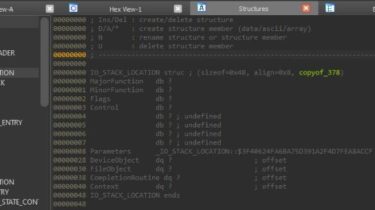
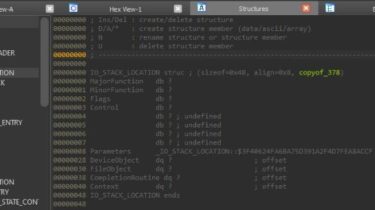
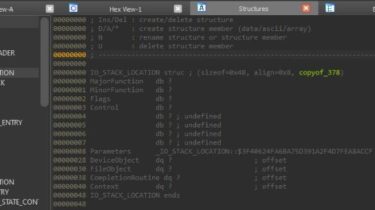
Installation Copy DriverBuddyReloaded folder and DriverBuddyReloaded.py file into the IDA plugins folder (e.g. C:Program Files (x86)IDA 7plugins) or wherever you have installed IDA. Usage To use the auto-analysis feature: Start IDA and load a Windows kernel driver. Go to Edit -> Plugins -> Driver Buddy Reloaded or press CTRL+ALT+A to start the auto-analysis. Check the “Output” window for the analysis results. To decode an IOCTLs: Place the mouse cursor on the line containing a suspected IOCTL code. Right-click and select […]

Read more

A browser login credentials thief for windows and Linux

A browser login credentials thief for windows and Linux Python script to decrypt login credentials from browsers in windows or linux Decryption of passwords from chromium browsers are only supported in windows systems now…=> Thief won’t look for credentials stored in chromium browsers in linux systems Usage $ create a new telegram bot and a new group $ add the bot to the group $ update the bot token and group id in the file “thief.py” $ run python3 thief.py […]

Read more

A project for Perotti’s MGIS350 for incorporating Flask

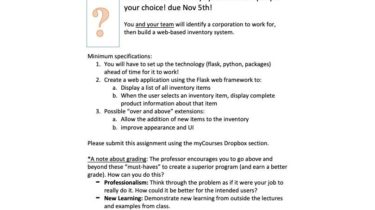
This is our project for Perotti’s MGIS350 for incorporating Flask… RIT Dev Biz Apps Web ProjectA web-based Inventory system for company of your choice! due Nov 5th! You and your team will identify a corporation to work for, then build a web-based inventory system. Minimum specifications: You will have to set up the technology (flask, python, packages) ahead of time for it to work! Create a web application using the Flask web framework to:a. Display a list of all inventory […]

Read more

A simple Python bot to identify sentiments in tweets

👋 Hi There! 📱 This is a simple Python bot to identify sentiments in tweets 👨‍💻 This project was made for study, and pratice. You can use it for study too or for any other reason 🙂 📎 Don’t forget to change the “key.txt” file for your personal twitter api key 👦 Thanky You! God Bleese you. GitHub View Github    

Read more

K-Nearest Neighbors and Random Forrest Regressors on Real World data

My project contrasts K-Nearest Neighbors and Random Forrest Regressors on Real World data In many areas, rental bikes have been launched to improve accessibility ease. It is important to have the rented bike ready and open to the public at the appropriate time, as this reduces the amount of time people have to wait. Eventually, ensuring a steady supply of rented bikes for the area becomes a big concern. The most important aspect is predicting the number of rental bikes […]

Read more
1 502 503 504 505 506 1,035