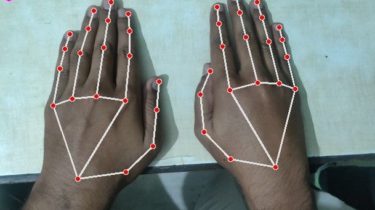
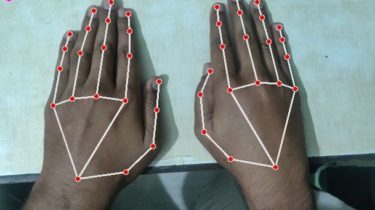
A hobby project which includes a hand-gesture based virtual piano using a mobile phone camera and OpenCV library functions
This is a hobby project which includes a hand-gesture controlled virtual piano using an android phone camera and some OpenCV library. My motivation to initiate this project is two fold. I always felt the urge to be able to play piano since my childhood but huge instrumental costs barred my way. This is true for most of the musical instruments which are often very costly. I thought of putting my recently acquired computer vision skills to practice and make virtual […]
Read moreRunning Chess Night results tabulation
Running Chess Night results tabulation:
Read more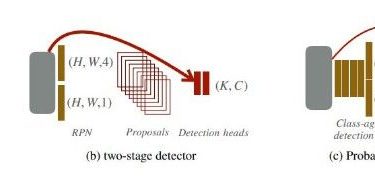
Gives criticality score for an open source project
This project is maintained by members of theSecuring Critical Projects WG. Goals Generate a criticality score for every open source project. Create a list of critical projects that the open source community depends on. Use this data to proactively improve the security posture of these critical projects. Criticality Score A project’s criticality score defines the influence and importance of a project.It is a number between0 (least-critical) and 1 (most-critical). It is based on the followingalgorithmby Rob Pike: We use the […]
Read more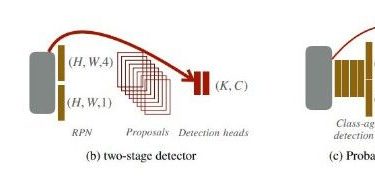
Two-stage object detectors that use class-agnostic one-stage detectors as the proposal network
Two-stage object detectors that use class-agnostic one-stage detectors as the proposal network. Probabilistic two-stage detection,Xingyi Zhou, Vladlen Koltun, Philipp Krähenbühl,arXiv technical report (arXiv 2103.07461) Contact: [email protected]. Any questions or discussions are welcomed! Abstract We develop a probabilistic interpretation of two-stage object detection. We show that this probabilistic interpretation motivates a number of common empirical training practices. It also suggests changes to two-stage detection pipelines. Specifically, the first stage should infer proper object-vs-background likelihoods, which should then inform the overall score […]
Read more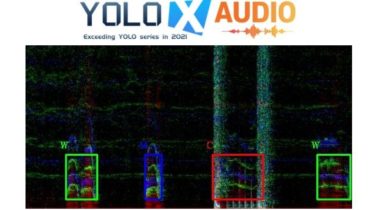
Audio event detection model based on YOLOX
Introduction YOLOX_AUDIO is an audio event detection model based on YOLOX, an anchor-free version of YOLO.This repo is an implementated by PyTorch.Main goal of YOLOX_AUDIO is to detect and classify pre-defined audio events in multi-spectrogram domain using image object detection frameworks. Updates!! 【2021/11/15】 We released YOLOX_AUDIO to public Quick Start Installation Step1. Install YOLOX_AUDIO. git clone https://github.com/intflow/YOLOX_AUDIO.git cd YOLOX_AUDIO pip3 install -U pip && pip3
Read more
A collection of all challenges in HKCERT CTF 2021
1 玩咗先至瞓 Sanity Check 50 234 #☆☆☆☆☆ 2 Freedom Cipher Mode Picker 100 21 #crypto #★☆☆☆☆ 4 所有遺失的東西 All Missing 150 27 #pwn #★☆☆☆☆ 5 留下來的人 The Remaining One 300 4 #pwn #misc #★★★☆☆ 6 今天我不想做嘢 Let’s Chill 450 4 #reverse #misc #★★★★☆ 7 集合吧!地球保衛隊 Sratslla SEA 450 2 #crypto #★★★★☆ 10 Ophiuchus Ophiuchus 500 2 #web #★★★★★ 11 無聲浪 The Wave of Us 50 152 #forensics #☆☆☆☆☆ 12 深夜浪漫 1 babyURIi 200 4 #pwn #web #★★☆☆☆ 15 幫緊你!幫緊你! Flag […]
Read more
Autosubmit your UCheck COVID-19 self-assessment form
Autosubmit your UCheck COVID-19 self-assessment form Disclaimer ucheck automatically completes the University of Tornto’s UCheck COVID-19 self-assessment form as follows: YES: “Do any of the following statements apply to you? – I am fully vaccinated against COVID-19.” NO: “Are you currently experiencing any of these symptoms? – Fever and/or chills (Temperature of 37.8 degrees Celsius/100 degrees Fahrenheit or higher).” NO: “Is anyone you live with currently experiencing any new COVID-19 symptoms and/or waiting for test results after experiencing symptoms?” NO: […]
Read more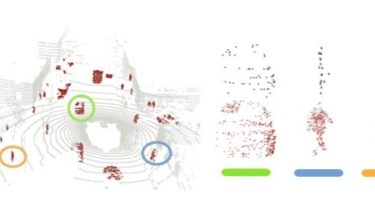
Multimodal Virtual Point 3D Detection
Turning pixels into virtual points for multimodal 3D object detection. Multimodal Virtual Point 3D Detection,Tianwei Yin, Xingyi Zhou, Philipp Krähenbühl,arXiv technical report (arXiv 2111.06881 ) @article{yin2021multimodal, title={Multimodal Virtual Point 3D Detection}, author={Yin, Tianwei and Zhou, Xingyi and Kr{“a}henb{“u}hl, Philipp}, journal={NeurIPS}, year={2021}, } Contact Any questions or suggestions are welcome! Tianwei Yin [email protected]Xingyi Zhou [email protected] Abstract Lidar-based sensing drives current autonomous vehicles. Despite rapid progress,
Read more
Freqtrade 3commas wrapper for python
The aim of this project is to provide an easy way to integrate freqtrade with 3commas. The main reason someone would want to do this is to use the auto DCA feature that 3commas provides and unfortunately freqtrade lacks. DCA can be risky, especially if used on bad/shit/meme coins, so please use responsibly. Make a 3commas account and bot First, you’ll need to create a 3commas account and connect 3commas to your exchange.Then create a multi-pair long bot with the […]
Read more