DeepMath: A lightweight math reasoning Agent with smolagents

By Intel AI Software Group DeepMath is an aligned math reasoning agent built on Qwen3-4B Thinking and fine-tuned with GRPO (Group Relative Policy Optimization). Instead of verbose text, the model emits tiny Python snippets for intermediate steps, runs them in a secure sandbox, and folds the results back into its reasoning, reducing errors and output length. The agent is implemented using the smolagents library. We evaluate DeepMath on four math datasets: MATH500, AIME, HMMT, and HLE, and    

Read more
CUGA on Hugging Face: Democratizing Configurable AI Agents

Introduction AI agents are rapidly becoming essential for building intelligent applications, but creating robust, adaptable agents that scale across domains remains a challenge. Many existing frameworks struggle with brittleness, tool misuse, and failures when faced with complex workflows. CUGA (Configurable Generalist Agent) was designed to overcome these limitations. It’s an open-source, AI Agent that combines flexibility, reliability, and ease of use for enterprise use cases. By abstracting orchestration complexity, CUGA empowers developers to focus on domain requirements rather    

Read more

The Open Evaluation Standard: Benchmarking NVIDIA Nemotron 3 Nano with NeMo Evaluator

It has become increasingly challenging to assess whether a model’s reported improvements reflect genuine advances or variations in evaluation conditions, dataset composition, or training data that mirrors benchmark tasks. The NVIDIA Nemotron approach to openness addresses this by publishing transparent and reproducible evaluation recipes that make results independently verifiable. NVIDIA released Nemotron 3 Nano 30B A3B with an explicitly open evaluation approach to make that distinction clear. Alongside the model card, we are publishing the complete evaluation recipe used to […]

Read more

Tokenization in Transformers v5: Simpler, Clearer, and More Modular

Transformers v5 redesigns how tokenizers work. The big tokenizers reformat separates tokenizer design from trained vocabulary (much like how PyTorch separates neural network architecture from learned weights). The result is tokenizers you can inspect, customize, and train from scratch with far less friction. TL;DR: This blog explains how tokenization works in Transformers and why v5 is a major redesign, with clearer internals, a clean class hierarchy, and a single fast backend. It’s a practical guide for anyone who wants to […]

Read more

AprielGuard: A Guardrail for Safety and Adversarial Robustness in Modern LLM Systems

Large Language Models (LLMs) have rapidly evolved from text-only assistants into complex agentic systems capable of performing multi-step reasoning, calling external tools, retrieving memory, and executing code. With this evolution comes an increasingly sophisticated threat landscape: not only traditional content safety risks, but also multi-turn jailbreaks, prompt injections, memory hijacking, and tool manipulation. In this work, we introduce AprielGuard, an 8B parameter    

Read more

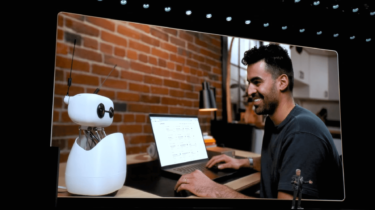
NVIDIA brings agents to life with DGX Spark and Reachy Mini

Today at CES 2026, NVIDIA unveiled a world of new open models to enable the future of agents, online and in the real world. From the recently released NVIDIA Nemotron reasoning LLMs to the new NVIDIA Isaac GR00T N1.6 open reasoning VLA and NVIDIA Cosmos world foundation models, all the building blocks are here today for AI Builders to build their own agents. But what if you could bring your own agent to life, right at    

Read more

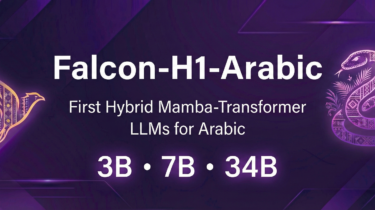
Introducing Falcon-H1-Arabic: Pushing the Boundaries of Arabic Language AI with Hybrid Architecture

Discover more in our official blogpost, featuring an interactive experience The journey of building world-class Arabic language models has been one of continuous learning and iteration. Today, we’re excited to announce Falcon-H1-Arabic, our most advanced Arabic language model family to date, representing a significant leap forward in both architecture and capabilities. This release embodies months of research, community feedback, and technical innovation, culminating in three powerful models that set new standards for Arabic natural language processing.

Read more
1 65 66 67 68 69 70