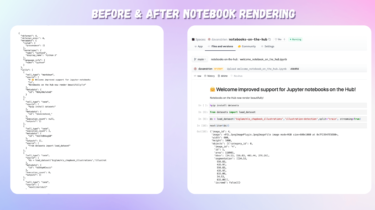
Jupyter X Hugging Face

We’re excited to announce improved support for Jupyter notebooks hosted on the Hugging Face Hub! From serving as an essential learning resource to being a key tool used for model development, Jupyter notebooks have become a key component across many areas of machine learning. Notebooks’ interactive and visual nature lets you get feedback quickly as you develop models, datasets, and demos. For many, their first exposure to training machine learning models is via a Jupyter notebook, and many practitioners use […]

Read more
Train your ControlNet with diffusers 🧨

ControlNet is a neural network structure that allows fine-grained control of diffusion models by adding extra conditions. The technique debuted with the paper Adding Conditional Control to Text-to-Image Diffusion Models, and quickly took over the open-source diffusion community author’s release of 8 different conditions to control Stable Diffusion v1-5, including pose estimations, depth maps, canny edges,    

Read more

Ethics and Society Newsletter #3: Ethical Openness at Hugging Face

In our mission to democratize good machine learning (ML), we examine how supporting ML community work also empowers examining and preventing possible harms. Open development and science decentralizes power so that many people can collectively work on AI that reflects their needs and values. While openness enables broader perspectives to contribute to research and AI overall, it faces the tension of less risk control. Moderating ML artifacts presents unique challenges due to the dynamic and rapidly evolving nature of these […]

Read more

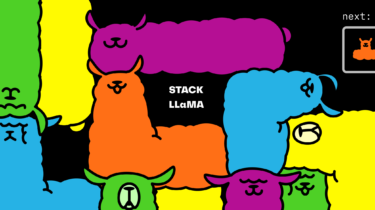
StackLLaMA: A hands-on guide to train LLaMA with RLHF

Models such as ChatGPT, GPT-4, and Claude are powerful language models that have been fine-tuned using a method called Reinforcement Learning from Human Feedback (RLHF) to be better aligned with how we expect them to behave and would like to use them. In this blog post, we show all the steps involved in training a LlaMa model to answer questions on Stack Exchange with RLHF through a combination of: Supervised Fine-tuning (SFT) Reward / preference modeling (RM) Reinforcement Learning from […]

Read more

Creating Privacy Preserving AI with Substra

With the recent rise of generative techniques, machine learning is at an incredibly exciting point in its history. The models powering this rise require even more data to produce impactful results, and thus it’s becoming increasingly important to explore new methods of ethically gathering data while ensuring that data privacy and security remain a top priority. In many domains that deal with sensitive information, such as healthcare, there often isn’t enough high quality data accessible to train these data-hungry models. […]

Read more

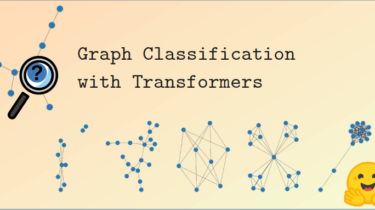
Graph classification with Transformers

In the previous blog, we explored some of the theoretical aspects of machine learning on graphs. This one will explore how you can do graph classification using the Transformers library. (You can also follow along by downloading the demo notebook here!) At the moment, the only graph transformer model available in Transformers is Microsoft’s Graphormer, so this    

Read more
1 18 19 20 21 22 70