What is AI? And what does it mean for me and the world?

Listen to my interview with the Insatiably Curious Podcast host, David Gee. Transcript of the podcast is as below. 00:07 Welcome to the Insatiably Curious Podcast, where we invite lifelong learners to join us on a personal and professional journey. Now here to inform, entertain and enlighten, while always keeping it interesting from our nation’s capital. It’s your host, David Gee. David Gee  00:26 Joining us today so glad to have her, Kavita Ganesan… She is the author of “The […]

Read more

Making pip installs a little less slow

Installing your Python application’s dependencies can be surprisingly slow. Whether you’re running tests in CI, building a Docker image, or installing an application, downloading and installing dependencies can take a while. So how do you speed up installation with pip? In this article I’ll cover: Avoiding the slow path of installing from source. pip download speed, and the alternatives: Pipenv and Poetry. A useful pip option that can, sometimes, speed up installation significantly. Avoiding installs from source When you install […]

Read more

Level Up Your Skills With the Real Python Slack Community

The Real Python Community Slack is an English-medium Python community with members located worldwide. It’s a welcoming group in which you’re free to discuss any questions you may have, celebrate your progress, or hang out with the community at the virtual watercooler. This guide is for you if you want to: Get the most out of the Real Python Slack community Navigate some of Slack’s most valuable features Get your questions answered by other Real Python members Learn the dos […]

Read more

Exploring Scopes and Closures in Python

Have you been wondering how scopes and closures work in Python? Maybe you’ve just heard about object.__closure__, and you’d like to figure out what exactly it does. In this Code Conversation video course, you’ll use the debugger Thonny to walk through some sample code and get a better understanding of scopes and closures in Python. In this Code Conversation video course, you’ll: Clarify code by refactoring it with descriptive names Learn how functions access variables in local and nonlocal scopes […]

Read more

How to Publish an Open-Source Python Package to PyPI

Python is famous for coming with batteries included, and many sophisticated capabilities are available in the standard library. However, to unlock the full potential of the language, you should also take advantage of the community contributions at PyPI: the Python Packaging Index. PyPI, typically pronounced pie-pee-eye, is a repository containing several hundred thousand packages. These range from trivial Hello, World implementations to advanced deep learning libraries. In this tutorial, you’ll learn how to upload your own package to PyPI. Publishing […]

Read more

Partnering people with large language models to find and fix bugs in NLP systems

Advances in platform models—large-scale models that can serve as foundations across applications—have significantly improved the ability of computers to process natural language. But natural language processing (NLP) models are still far from perfect, sometimes failing in embarrassing ways, like translating “Eu não recomendo este prato” (I don’t recommend this dish) in Portuguese to “I highly recommend this dish” in English (a real example from a top commercial model). These failures continue to exist in part because finding and fixing bugs […]

Read more

(De)ToxiGen: Leveraging large language models to build more robust hate speech detection tools

It’s a well-known challenge that large language models (LLMs)—growing in popularity thanks to their adaptability across a variety of applications—carry risks. Because they’re trained on large amounts of data from across the internet, they’re capable of generating inappropriate and harmful language based on similar language encountered during training.   Content moderation tools can be deployed to flag or filter such language in some contexts, but unfortunately, datasets available to train these tools often fail to capture the  

Read more

CPUs, cloud VMs, and noisy neighbors: the limits of parallelism

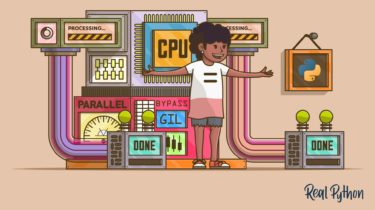
Sometimes your program is slow not because of your code, but because of where it’s running. If you have other processes competing for the same limited hardware resources, your code will run more slowly. Once you add virtualization into the mix, those competing processes might be invisible… but they’re still there. In this article we’ll cover: The hardware limits of CPUs’ cores and “hyperthreads”. How operating systems deal with multiple processes that want to use limited number of CPU cores. […]

Read more

Build a URL Shortener With FastAPI and Python

In this tutorial, you’ll build a URL shortener with Python and FastAPI. URLs can be extremely long and not user-friendly. This is where a URL shortener can come in handy. A URL shortener reduces the number of characters in a URL, making it easier to read, remember, and share. By following this step-by-step project, you’ll build a URL shortener with Python and FastAPI. At the end of this tutorial, you’ll have a fully functional API-driven web app that creates shortened […]

Read more

Using Python Class Constructors

Class constructors are a fundamental part of object-oriented programming in Python. They allow you to create and properly initialize objects of a given class, making those objects ready to use. Class constructors internally trigger Python’s instantiation process, which runs through two main steps: instance creation and instance initialization. If you want to dive deeper into how Python internally constructs objects and learn how to customize the process, then this video course is for you. In this video course, you’ll: Understand […]

Read more
1 215 216 217 218 219 989